By Luke, Physiotherapist at Ethos Health
Headaches and migraines can be incredibly disruptive. For some people, they are an occasional inconvenience, but for others, they become something that dictates how they live their life.
I have a particular interest in treating people who experience regular headaches and migraines. Over several years, I have worked with people who have suffered for decades and have struggled to find a solution that improves their headaches. Many of these people have relied on preventative medications without having another clear treatment strategy to help manage their symptoms.
While headaches and migraines can have many contributing factors, one area that is often overlooked is the relationship between the upper neck and head pain.

Understanding migraines: the “bubbling pot” analogy
A useful way to think about migraine is like a bubbling pot.
The pot is constantly simmering away in the background. On a daily basis, different factors can increase the sensitivity of the system, and eventually the pot can “boil over”, resulting in a full migraine episode.
Factors that may contribute to this include:
- Stress
- Fatigue
- Dehydration
- Diet
- Exposure to certain smells or foods
- Poor posture
- Hormonal changes
For many people, this can look like waking up with a headache and immediately recognising that it may progress into a migraine. For others, they may be going about a normal day when they encounter a known trigger and suddenly feel the need to retreat somewhere quiet and dark.
Some people experience warning signs before a migraine, such as sudden changes in vision. This can provide a brief window of opportunity to manage the symptoms by resting in a quiet, dark room, using heat or ice, and taking prescribed medication if required.
A migraine episode involves sensitisation of the pain centres of the brain. Once this process begins, it can result in symptoms including:
- Numbness and tingling in the head, face, or other areas of the body
- Severe head pain
- Dizziness
- Nausea
- Sensitivity to light and sound
The relationship between your neck and headaches
My assessment and treatment approach is based on the Watson Headache® approach, which has been a valuable tool in assessing and managing headaches and migraines where the neck may be a contributing factor.
Research has shown that the first three segments of the upper neck (C0–C1, C1–C2 and C2–C3) can contribute to head pain episodes. Irritation of the joints, intervertebral discs, or surrounding nerves in these areas can refer pain into the neck, head, and face.
This referral from the upper neck can sometimes contribute to symptoms such as:
- Head pain
- Dizziness
- Unsteadiness
- Changes in vision
- Nausea
- Numbness or tingling in the face or arms
Examples of common head referral patterns from the upper cervical spine:
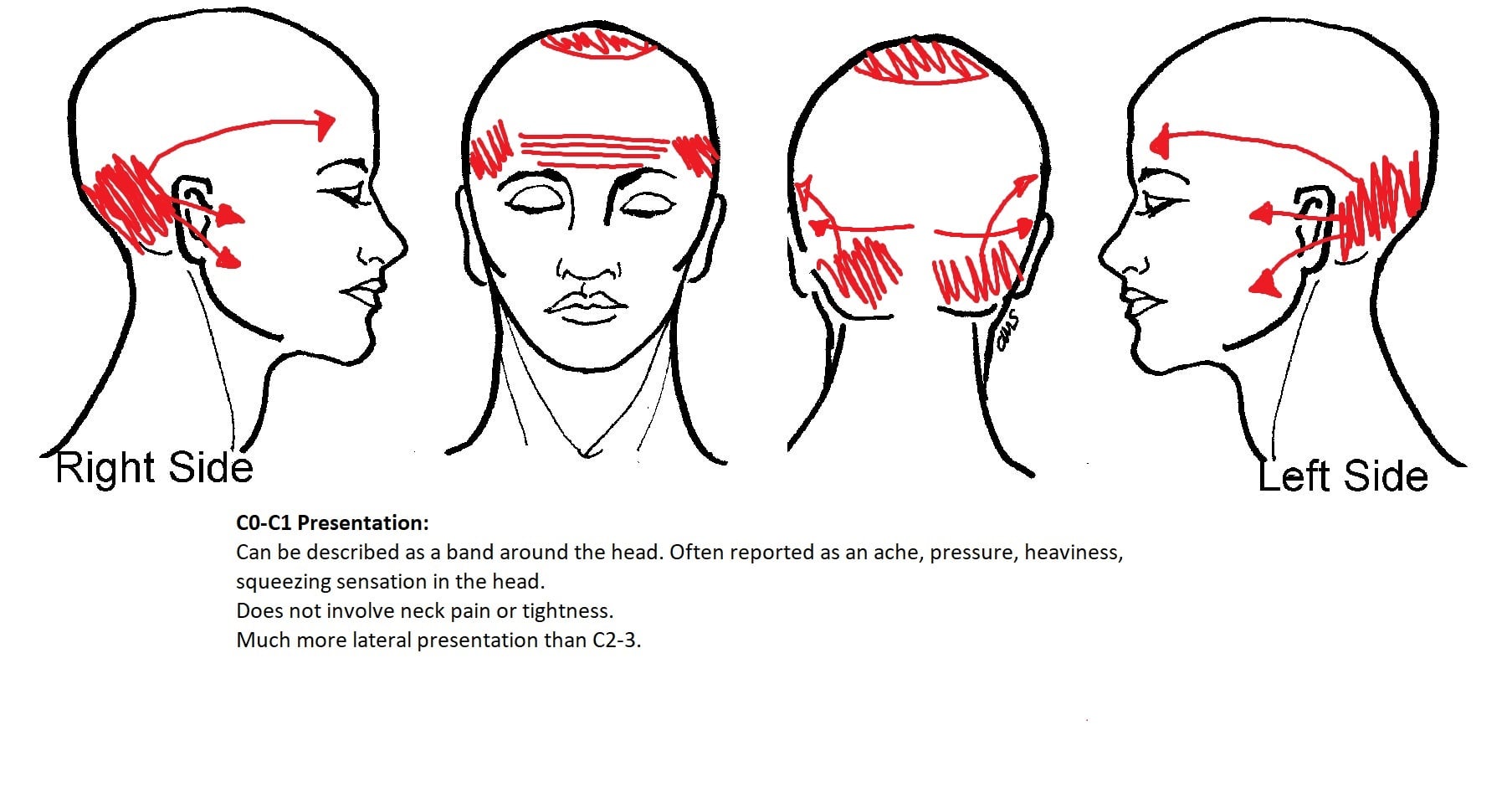
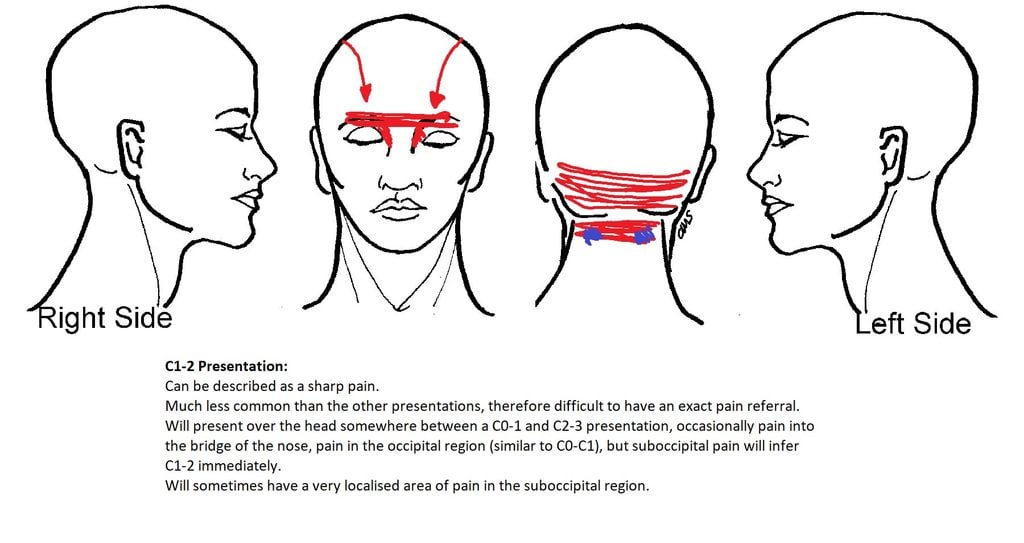
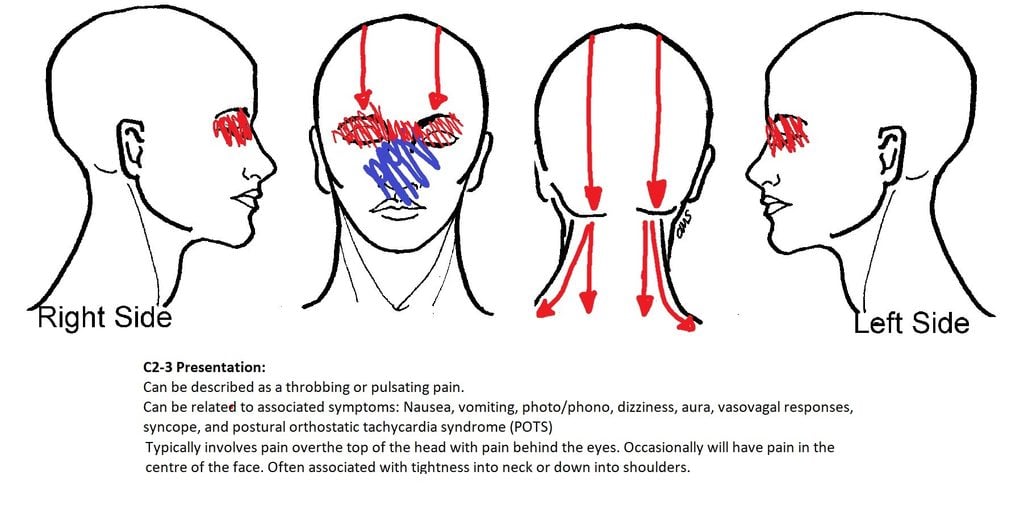
The goal of this approach is not to assume that every headache or migraine comes from the neck. Instead, the focus is to determine how much the upper neck may be contributing to your symptoms and whether it is a modifiable factor.
I also consider other factors that may influence headache behaviour, including:
- Medication use
- Lifestyle factors
- Changes in body function
- Daily triggers and routines
What happens during your initial headache assessment?
Your first consultation will involve a detailed assessment to understand your individual headache or migraine experience.
This includes:
1. Understanding your headache history
We will discuss:
- When your headaches or migraines started
- How often they occur
- What they feel like
- How they impact your daily life
- Any associated symptoms you experience
2. Identifying potential triggers
We will explore possible daily triggers and patterns, including:
- Stress levels
- Sleep and fatigue
- Diet and hydration
- Environmental triggers
- Other symptoms that occur alongside your migraines
3. Reviewing previous treatments
Understanding what has and hasn’t worked in the past is an important part of developing an effective treatment plan.
4. Assessing the upper neck
I will assess the upper neck to determine whether there are specific structures that may be contributing to your symptoms.
Importantly, treatment will not involve neck manipulation or “cracking” of the neck.
5. Developing a treatment trial
Together, we will develop a treatment plan over approximately one month to determine whether manual therapy and targeted management strategies are helping your symptoms.
If I am unable to help, we can discuss other pathways and strategies that may assist in reducing the severity or frequency of your headaches.
Each of these steps helps identify the potential drivers of your head pain and guides the development of an individualised treatment plan.
Headache symptoms that may involve the neck
Cervicogenic headaches, or migraines with a cervicogenic component, can sometimes present with symptoms beyond head pain.
These may include:
Aura symptoms
- Loss of vision
- Distorted vision
- Flashes of light
- Static in vision
- Difficulty focusing
Dizziness
- Vertigo (spinning sensation)
- Unsteadiness
- Light-headedness
Other symptoms
- Difficulty speaking or swallowing
- Sensitivity to light and sound
- Nausea and vomiting
- Numbness and tingling in the face or arm
- Weakness or loss of function on one side of the body (a presentation that can resemble stroke symptoms)
Any new, sudden, or concerning neurological symptoms should always be assessed appropriately by a medical professional.
You don’t need severe headaches to benefit from assessment
My treatment approach is not limited to people experiencing severe migraines.
Some people live with a daily headache that they have learned to ignore while working, exercising, or managing family life. Even these persistent, lower-level headaches may respond well to appropriate assessment and treatment.
A neck contribution to headaches is not always obvious, particularly if you don’t experience noticeable neck pain. Small changes in the function of the upper neck may still irritate surrounding structures and contribute to head pain.
A thorough assessment can help determine whether this may be playing a role.

Why see a physiotherapist for headaches or migraines?
A physiotherapy assessment may be useful if:
- You have never had your neck properly assessed in relation to your headaches or migraines
- Your headaches have increased in frequency or severity
- Your headaches are beginning to dictate your lifestyle
- Medication only helps when taken early enough
- You experience headaches or migraines without obvious neck pain
The goal: helping you self-manage your symptoms
The aim of treatment is not to create ongoing dependence on appointments, but to help you better understand your symptoms and develop strategies to manage them.
Initially, appointments may be more frequent (for example, twice per week or weekly) while we monitor changes and determine whether treatment is helping.
If your symptoms improve, the goal is to gradually space appointments out into a maintenance phase. This may involve check-ins anywhere from once a month to every few months, depending on your individual needs.
The overall goal is to maintain healthy upper neck function, reduce the likelihood of irritation returning, and give you the confidence to better manage your headaches or migraines.
Could your neck be contributing to your headaches or migraines?
If you experience regular headaches or migraines and have never had your neck properly assessed, a physiotherapy consultation may help determine whether the upper neck could be contributing to your symptoms.